
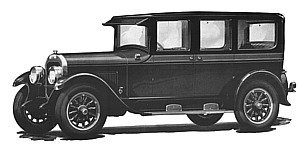
1926 Flint E-80 Five Passenger Sedan
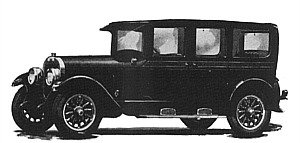
1926 Flint E-80 Seven Passenger Sedan
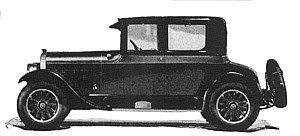
1926 Flint E-80 Coupe
1926 Flint E-80 Roadster
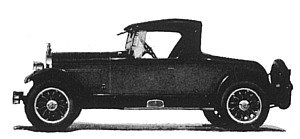
1926 Flint E-80 Sport Touring

1926 Flint E-80 Touring
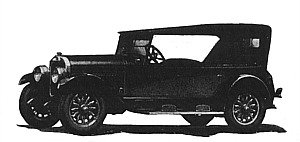
Special features
- Continental built, six cylinder engine
Body styles and prices
| Body style | Price |
|---|---|
| Five Passenger Touring | $1,595.00 |
| Sport Touring | $1,945.00 |
| Five Passenger Sedan | $2,195.00 |
| Seven Passenger Sedan | $2,395.00 |
| Coupe | $2,045 |
| Roadster | $1,945 |
Serial number range
18931 to 20102
Specifications
| Item | Specification |
|---|---|
| Engine | “Flint” special design, “Continental” built, six-cylinder, L-head, 268.4 cubic inch piston displacement (3-3/8″ bore by 5″ stroke) Brake horsepower, 65 at 2,400 r.p.m. Torque, 165 foot-pounds at 800 r.p.m. |
| Cylinders | Cast en-bloc with upper half of crankcase. Detachable cylinder head. |
| Crankshaft | Seven bearing crankshaft. |
| Camshaft | Four bearing camshaft bushed throughout and driven by “Morse” silent chain. |
| Engine Lubrication | Force feed oiling system to all main, connecting rod and camshaft bearings by gear pump. Equipped with “The Purolator” oil filter. |
| Cooling System | Impeller type water pump; four blade 18″ fan driven by V-belt; “Fedders” cellular radiator; water jackets extend below bottom of piston stroke. water temperature indicator mounted on instrument board. |
| Gasoline Supply | 10 gallon gasoline tank at rear of car. Stewart vacuum feed system. Vacuum tank fitted with “Gas-Co-Lator” fuel filter. |
| Carburetor | 1-1/4″ Stromberg carburetor fitted with air cleaner. Combination intake and exhaust manifold, with hot spot om left side of motor. |
| Clutch | Single dry disc; enclosed in flywheel; easily adjustable and very smooth acting. Extra large friction surface. |
| Transmission | Three forward speeds and one reverse; main shaft mounted on ball bearings. Mounted amidship on tubular sub-frame with motor. |
| Universal Joints And Propeller Shaft | “Spicer” shock absorbing joint between motor and transmission and “Spicer” standard joints between transmission and rear axle. |
| Front Axle | Reverse Elliot type “I” beam forgings; especially designed for four-sheel hydraulic brakes, and for easy steering wheel bearings, Timken taper roller. |
| Rear Axle | Semi-flaoting. Pionion shaft and differential mounted on extral large ball bearings. Wheel bearings Timken taper roller, adjustable from outside. Spiral gear and pinion. Pinion shaft and pinion drop forging machines integral and driven by splines instead of keys. Axle shafts removable without dismantling axle. |
| Steering Gear | Ross-Warner semi-irreversible cam and lever type, with variable ratio. Bal lthrust bearings and bronze bushings, fully adjustable. |
| Brakes | Lockheed hydraulic four-wheel internal expanding; 14″ diameter drum. |
| Chassis Lubrication | Zerk pressure feed. |
| Springs | Semi-elliptic; rear, 55″ long and 2″ wide; front, 36-1/2″ long and 2″ wide. |
| Wheelbase | 5-passenger, 120 inches; 7-passenger, 130 inches. |
| Starting, Lighting And Ignition | “De Jon” system. “Bendix” drive starter. |
| Standard Equipment | Instrument board equipped with: cluster instrument panels, including ammeter, radimeter, oil gauge, gasoline gauge, speedometer, electric clock and lighting and ignition switch, concealed instrument board light. Horn button and dimming switch on top of steering wheel. Combination stop and tail lamp.; automatic windshield wiper; rear-view mirror, aluminum kick plates, tool kit, extra rim, cowl ventilator. |
Sources: Durant Family Registry, Durant’s Standard, vol. 7 no. 3, vol. 10 no. 4, vol. 12 no. 4, vol. 16 no. 2, vol. 17 no. 4, vol. 20 no. 3; Tad Burness, Monstrous American Car Spotter’s Guide 1920–1980, p. 100.
Previous: 1926 Flint B-60 · Next: 1926 Flint Z-18 (Flint Junior) · All Flint models · Flint serial numbers